Have an Idea?
Let’s Build it Prettify
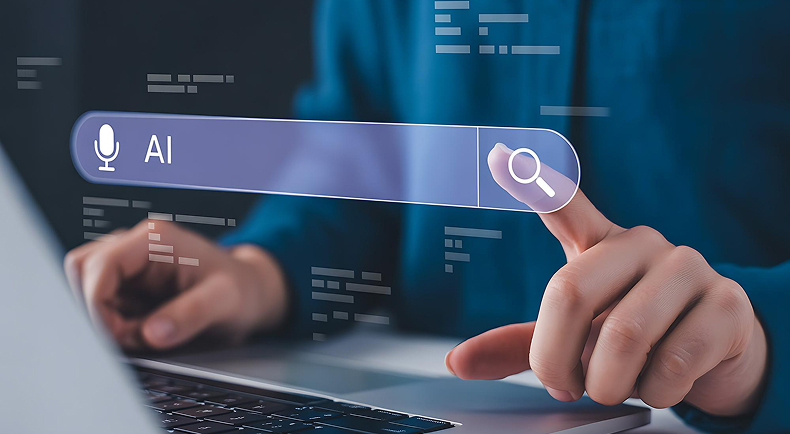
Artificial intelligence is transforming how people discover businesses, research services, and make purchasing decisions online. Traditional search engines usually provide a list of websites, while AI- powered search experiences can deliver direct answers, recommendations, and summaries from multiple sources.
For businesses, this change creates new opportunities and challenges. A visually appealing website is no longer enough on its own. Companies also need informative content, organized website structures, strong technical performance, and effective search engine optimization.
Understanding how AI search influences website design and SEO can help businesses develop a stronger digital presence and connect with potential customers.
AI search uses artificial intelligence to understand user questions and provide relevant responses.
Instead of entering short keywords, users can ask detailed questions such as “How much does professional website development cost?” or “What makes a business website successful?”
AI-powered search tools may summarize relevant information and direct users to supporting websites. This makes it increasingly important for businesses to publish content that clearly answers customer questions.
However, AI search does not replace traditional SEO. Search engines still depend on accessible websites, relevant content, and technical optimization.
Search intent describes what users want to accomplish when entering a query. For example, someone searching for “website design services” may want to hire a professional agency, while someone searching for “how website design affects SEO” is looking for information.
Businesses should create content that addresses both informational and commercial searches. Rather than repeatedly inserting keywords, companies should explain their services, answer common questions, and provide practical information.
This approach makes content more useful to readers and easier for search systems to interpret.
AI-powered search experiences can use information from webpages to develop answers. Websites that provide useful explanations, original insights, and clear service descriptions can offer stronger informational value than pages containing repetitive promotional content.
Businesses should consider publishing practical guides, service comparisons, case studies, and frequently asked questions. For example, a digital agency can explain the differences between custom website development and ready-made website templates.
These topics help potential customers understand their options while supporting broader SEO strategies.
Clear website organization helps visitors and search engines understand information. Every important service should have a dedicated page with descriptive headings, useful explanations, and relevant internal links.
For example, businesses offering multiple digital services should separate website design, development, branding, and marketing into clearly defined sections. A logical structure allows visitors to find information without unnecessary confusion.
It also helps search engines discover and interpret relationships between pages.
Website design plays an important role in both user experience and search performance. A modern business website should combine visual appeal with functionality, accessibility, and clearly organized information.
Customers frequently access business websites through smartphones and tablets. Responsive websites adjust automatically to different screen sizes, making content easier to read and navigation more convenient.
Businesses investing in professional website design services should prioritize responsive layouts, readable text, and simple navigation.
These features create a better browsing experience and help visitors interact with essential website information.
Slow-loading websites can discourage visitors from exploring services or submitting inquiries. Businesses can improve performance by optimizing images, reducing unnecessary scripts, and maintaining efficient website code.
Fast-loading websites provide a smoother user experience and support technical SEO. However, improving speed alone does not guarantee better rankings or inclusion in AI-generated search responses.
Visitors should quickly understand what a business offers. Descriptive headings, organized service sections, and clear calls to action make websites easier to use.
Professional website development can help businesses create scalable website structures that support both usability and future growth.
Structured data, commonly called schema markup, provides search engines with standardized information about website content. Businesses can use different schema types to describe organizations, services, products, articles, and other relevant information.
For example, Organization schema identifies business details, while Service schema explains specific offerings. Structured data can improve how search engines understand supported website information, but it does not guarantee visibility in AI-generated answers.
According to Google Search Central’s official AI search guidance, established SEO practices remain relevant for AI-powered search experiences, and special AI-specific schema markup is not required.
Businesses should ensure that structured data accurately represents information available on their webpages.
Internal links connect relevant pages within a website. They help visitors explore additional information while allowing search engines to discover related content.
For example, a blog discussing AI search can link naturally to website design or development services. Similarly, articles explaining search visibility can guide readers toward digital marketing solutions.
Businesses can explore digital marketing services to understand how website optimization, online visibility, and marketing strategies support one another.
Internal links should always provide useful context rather than appearing as unnecessary keyword placements.
Businesses do not always need a complete website redesign to adapt to changing search technology. Several practical improvements can strengthen an existing digital presence.
These improvements support both traditional search performance and broader online discoverability.
Businesses sometimes respond to AI search trends by publishing large volumes of automatically generated content. However, quantity alone does not establish authority or improve visibility.
Generic articles, misleading structured data, repetitive keywords, and poorly organized webpages can reduce content quality. Another common mistake is prioritizing visual design while ignoring technical performance and accessibility.
Successful websites need a balance between appearance, functionality, and informative content. Businesses should focus on creating useful digital experiences rather than attempting to manipulate individual search features.
AI search is changing how customers find information and interact with businesses online. However, traditional SEO and professional website design remain essential.
Companies that prioritize helpful content, responsive design, technical performance, and clear website navigation will be better prepared to adapt to evolving search experiences.
A well-designed website should not only attract visitors but also help them understand services and take meaningful action.
For businesses looking to strengthen their digital presence, Prettify Creative provides website design and development solutions that support modern business requirements.
By combining useful content with professional development and effective SEO practices, businesses can build a stronger foundation for long-term online growth.
16 Sep 2026

11 Aug 2026
22 Jun 2026
16 Jun 2026

01 Jun 2026
27 May 2026

23 May 2026
Collaborate with us to elevate your brand, driving growth and success through innovative strategies.